How Three Producers Built the Case for Paso Robles Cabernet Sauvignon
Before Paso Robles had 200-plus tasting rooms and a reputation that made Napa look over its shoulder, a handful of winemakers were doing something most people thought was foolish: betting their careers on Cabernet Sauvignon from a region nobody took seriously. Eberle Winery was among the first, planting the flag in 1979. Nearly two decades later, Chateau Margene and Écluse Wines joined from opposite corners of the appellation, each proving that Paso’s Cabernet could stand alongside the best in California.
These three wineries didn’t just ride the region’s rise. They helped build it. And visiting all three gives you something rare: a firsthand look at how terrain, philosophy, and stubbornness converge to produce wines that have quietly earned national recognition.

Eberle Winery: The Founding Father of Paso Robles Cabernet
You can draw a straight line from Gary Eberle to the Paso Robles wine region as it exists today. A Penn State defensive tackle who earned All-American honors under Joe Paterno, Gary traded the football field for a genetics lab at LSU before a bottle of wine redirected his life entirely. He arrived on the Central Coast in the early 1970s, helped establish his family’s Estrella River Winery, and then struck out on his own in 1979 with 64 acres just down the road on Highway 46 East.
That first vintage — the 1979 Eberle Cabernet Sauvignon — debuted the iconic boar logo that still marks every bottle. (Eberle means “small boar” in German.) More importantly, it was among the earliest wines to carry the Paso Robles AVA designation on its label. Gary didn’t just make wine here. He co-founded the AVA itself in 1983, argued for its legitimacy when few were listening, and built the first wine caves in Paso Robles in 1994.
What to Expect When You Visit
The tasting room sits on Highway 46 East, surrounded by the estate’s original vines. Complimentary tastings and cave tours are offered daily — one of the few remaining wineries in the region where you can taste without a fee. A Reserve tasting is available for a small additional charge.
The caves are worth the visit on their own. Cut 16 feet into the hillside and stretching thousands of square feet underground, they maintain a natural temperature perfect for barrel aging. Tours run regularly and give you a tangible sense of why Eberle’s wines have the structure and depth they do.
What sets Eberle apart from most Eastside producers is the sheer length of the track record. This isn’t a winery trading on potential. It’s one trading on four decades of proven Cabernet from a vineyard that has seen every drought, heat spike, and vintage challenge the region has thrown at it. Wine Enthusiast named Gary Eberle an American Wine Legend in 2020, and the estate’s current winemaker, Chris Eberle, has continued that legacy without missing a step.
Local Tip: Visit in the morning before the Eastside heats up, then walk the caves to cool down. If you’re here on a Friday or Saturday, check the events calendar — Eberle regularly hosts food trucks and live music on the vineyard deck.
Address: 3810 Highway 46 East, Paso Robles, CA 93446
Hours: Open daily, 10:00 AM – 6:00 PM
Tasting Fee: Complimentary (Reserve tasting available for a fee)
Reservations: Recommended but walk-ins welcome. Check their website for current availability.
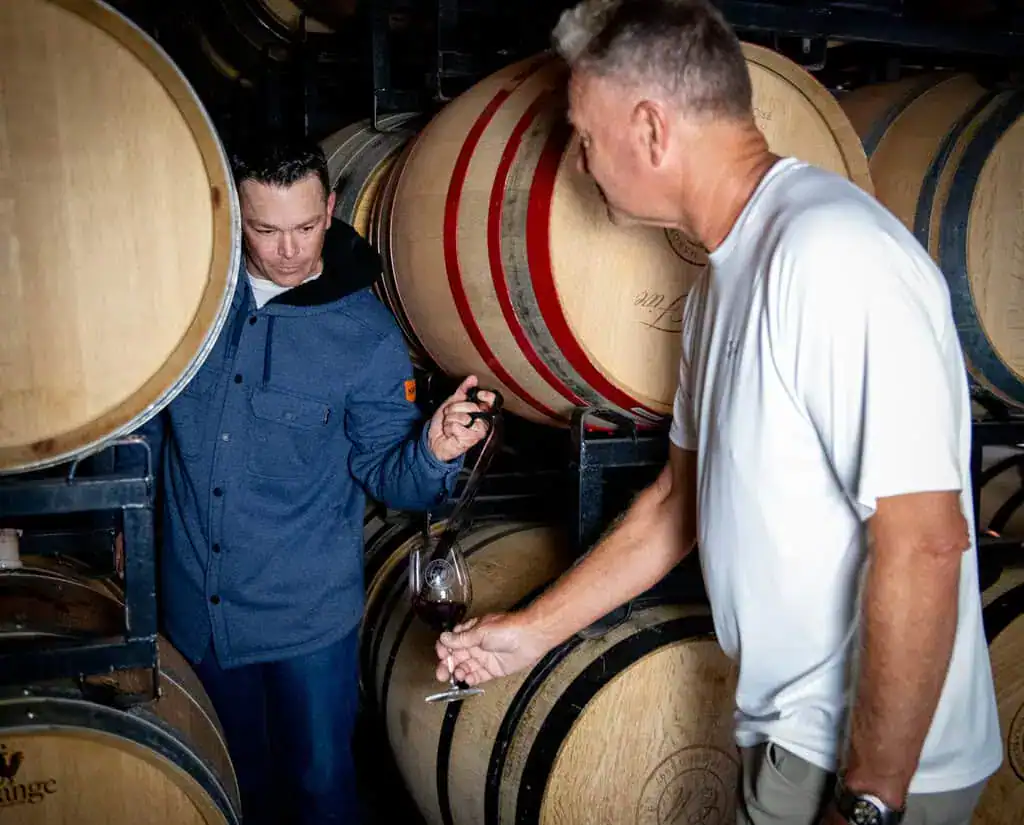
Chateau Margene: The Ultra-Premium Cabernet Specialist You Probably Haven’t Found Yet
If Eberle wrote the first chapter of Paso Robles Cabernet, Chateau Margene has been quietly writing one of the most meticulous ones. Tucked into the Creston District on La Panza Road — a stretch of rolling hills southeast of downtown that most visitors never reach — the Mooney family has produced ultra-premium Cabernet Sauvignon and Bordeaux-style blends since 1998.
Michael Mooney’s California roots run seven generations deep. His great-great-grandfather received a Mexican Land Grant in 1842, Rancho Canada de Los Osos, in San Luis Obispo County. When Michael and his wife Margene purchased 21 acres of rolling terrain at 1,150 to 1,220 feet above sea level, they weren’t chasing a trend. They were returning to family land.
The Wines
Nine acres are planted to Cabernet Sauvignon, Cabernet Franc, Merlot, Malbec, and Sangiovese — the classic Bordeaux varieties plus an Italian outlier that reflects Michael’s willingness to follow the fruit rather than convention. Farming is organic and sustainable. Annual production hovers between 2,500 and 3,000 cases, with individual lot sizes ranging from 100 to 500 cases. Every grape comes from the estate.
This is a family operation in the most literal sense. Michael manages the vineyard and oversees winemaking. Son Jon serves as assistant winemaker. Margene — the winery’s namesake — handles daily business operations and personally makes the estate Cabernet Franc.
The results speak through the scores. The 2019 Stella’s Cabernet Sauvignon earned 94 points from Wine Enthusiast, which described its “expertly chiseled tannins” and “elegant darkness.” Chateau Margene was also a founding member of the Paso Robles CAB Collective, the regional organization dedicated to elevating Paso’s Cabernet and Bordeaux-variety wines.
Why It’s Worth the Drive
The Creston District doesn’t get the foot traffic of Highway 46 or Tin City, which is precisely the point. Visiting Chateau Margene feels like arriving at a private estate because it is one. The Mooneys still live on the property, surrounded by their vines. You’re tasting wines made by the people who farmed the grapes, in the place where those grapes grew.
If you care about Cabernet Sauvignon with provenance — wines where you can trace every decision from rootstock to bottle — Chateau Margene is one of the most compelling producers in the entire appellation.
Local Tip: Call ahead. The tasting room is open Friday through Monday, and the Creston District is a 20-minute drive from downtown Paso Robles. Combine a visit with a stop at one of the other Creston-area producers for a half-day exploring a part of the AVA that feels distinctly different from the Westside.
Address: 4385 La Panza Road, Creston, CA 93432
Hours: Friday – Monday, 11:00 AM – 5:00 PM (closed Tuesday – Thursday)

Écluse Wines: Estate Cabernet from the Willow Creek District
Five minutes west of downtown Paso Robles, Écluse Wines occupies 30 acres of rolling Willow Creek District terrain on Kiler Canyon Road. The name comes from the French word for the locks on canal systems — a nod to the Lock family, who purchased the property in 1997, planted the vineyard, and built a winery that would become one of Paso’s most respected small-production estates.
Steve and Pam Lock didn’t start as winemakers. They started as growers. Lock Vineyard fruit quickly became some of the most sought-after on the Westside, purchased by established producers who recognized the site’s potential before the Locks did. After working alongside several of those winemakers and tasting what their vineyard could produce in other hands, Steve Lock made the leap. The first Écluse wines were bottled in 2001, starting with just 175 cases.
A New Chapter with Deep Roots
In April 2025, Steve and Pam passed the winery to Josh and Gibsey Beckett of Thibido Winery — second-generation Paso Robles winegrowers whose family history is intertwined with the property itself. Josh grew up immersed in Central Coast winemaking through his family’s work at Peachy Canyon Winery, and first learned vineyard and cellar work in the old barn on the very property that is now Écluse. The transition feels less like a sale and more like a homecoming.
The entire Écluse team remains, including longtime winemaker Anthony La Duca, who has shaped the wines for more than 14 years. Guests can now taste both Écluse and Thibido wines under one roof, offering an expanded range that spans Bordeaux and Rhône varieties, Zinfandel, and creative small-lot bottlings.
The Wines Worth Seeking
Écluse’s Cabernet Sauvignon and Bordeaux-style blends anchor the lineup, but the portfolio runs broader than many visitors expect. Recent Wine Enthusiast scores tell the story: the 2023 Lock Vineyard Syrah earned 94 points, the Rendition and Ensemble blends each pulled 93, and the 2023 Tannat — a grape you rarely see done well in California — scored 92.
The tasting room, set within the winery’s barrel room, offers current releases alongside exclusive barrel samples. It’s the kind of intimate experience where you taste surrounded by the actual barrels aging next year’s wines.
The Willow Creek Advantage
The Willow Creek District benefits from the Templeton Gap — a break in the coastal mountains that funnels cool Pacific air into the vineyards each afternoon. That marine influence moderates summer heat and extends the growing season, giving Cabernet Sauvignon the time to develop the depth and complexity that defines the best Westside wines. Lock Vineyard, with its mix of sedimentary soils and gentle slopes, has been proving the district’s potential for nearly three decades.
Local Tip: Écluse is close enough to downtown that you can combine it with a morning of tasting on the Westside and still make a downtown dinner reservation. Tastings are by appointment — book in advance, especially on weekends.
Address: 1520 Kiler Canyon Road, Paso Robles, CA 93446
Hours: Thursday – Monday, 11:00 AM – 4:00 PM (closed Tuesday – Wednesday)
Reservations: Required. Contact the tasting room to schedule, particularly for groups larger than six.
How to Visit All Three: A Paso Robles Cabernet Day Trip
These three wineries span the full geography of Paso Robles Cabernet country. Here’s how to make a day of it.
Morning: Eberle Winery (Eastside)
Start on Highway 46 East while the morning is still cool. Eberle opens at 10:00 AM, and the complimentary tasting and cave tour make it an ideal first stop. Allow about 90 minutes.
Midday: Écluse Wines (Westside / Willow Creek)
Head west through downtown and up Kiler Canyon Road. The barrel room tasting at Écluse is a slower, more intimate experience — perfect for midday when you want to sit and focus on the wines. Grab lunch downtown on your way through, or plan to eat after.
Afternoon: Chateau Margene (Creston District)
Continue south to Creston for the most off-the-beaten-path stop of the day. La Panza Road takes you through terrain that looks and feels nothing like the Highway 46 corridor. The Mooneys’ estate is a fitting finale — quiet, personal, and focused entirely on what the vines in front of you can produce.
This route covers the Eastside, Westside, and Creston District in a single arc, giving you a firsthand understanding of how Paso’s diverse geography shapes its most important grape variety. The drive between all three is about 45 minutes total.
Paso Robles’ Cabernet Story Is Still Being Written
Cabernet Sauvignon put Paso Robles on the wine map, and these three producers show you exactly how that happened. Gary Eberle planted the roots in 1979. The Mooneys proved that ultra-premium, estate-grown Cabernet could come from corners of the appellation nobody was watching. And the team at Écluse — from the Locks to the Becketts to winemaker Anthony La Duca — demonstrated that Westside fruit could produce wines that compete with anything on the Central Coast.
What connects them isn’t just a grape variety. It’s a commitment to place — to farming specific sites, learning their rhythms over decades, and producing wines that couldn’t have come from anywhere else.
For a deeper look at Paso Robles Cabernet across the region, explore the winery directory or browse itineraries organized by district and experience.