Paso Robles grows serious Pinot Noir, and most visitors have no idea. While the region’s reputation rests on Cabernet Sauvignon, Zinfandel, and Rhône varieties, a network of dedicated producers — more than 24 strong — crafts Pinot Noir from some of California’s most distinctive cool-climate pockets.
The secret is the Templeton Gap, a series of breaks in the Santa Lucia Range that channels Pacific air inland, dropping nighttime temperatures by 40–50°F from daytime highs. This two-day weekend itinerary threads together downtown tasting rooms and westside vineyard estates into a focused Pinot Noir exploration that rivals any California wine region for discovery and surprise.
Contents
The Templeton Gap Explains Everything
Understanding why Paso Robles can produce quality Pinot Noir starts with geography. The Pacific Ocean sits just 18 nautical miles west, but the Santa Lucia Mountains block most marine influence from reaching the inland valley — except where the range dips.
The Templeton Gap, a term coined by Ken Volk in 1982, describes the low passes and ravines through which cool, fog-laden air pours eastward each afternoon. Like clockwork, by 3PM. the marine layer spills over the range crest at 1,400–1,800 feet, creating what locals call “the fog monster” — massive fingers of mist reaching across the mountains.
This produces California’s largest diurnal temperature swing: daytime highs of 85–105°F plummet to nighttime lows of 45–55°F. For Pinot Noir, this is ideal. Warm days build sugar and phenolic ripeness while cold nights lock in organic acids. The result is a style distinct from other California Pinot regions — riper dark fruit (Bing cherry, plum, cherry cola) layered over a mineral backbone from calcareous soils, with surprising acidity and freshness.
Paso Robles’ Pinot Noir history also runs deeper than most realize. In 1964, Dr. Stanley Hoffman planted Pinot Noir at Hoffman Mountain Ranch in what is now the Adelaida District — the oldest producing Pinot Noir vineyard on the Central Coast.
André Tchelistcheff, the legendary Napa winemaker, consulted on the project and called the site “a jewel of ecological elements.” The 1975 HMR Pinot Noir placed third in the world at a Paris competition comparing 330 wines from 33 countries. Since Windward Vineyard’s first release in 1993, Pinot Noir plantings on the westside have increased 16-fold.
Day 1: Downtown Paso Robles on Foot
Downtown Paso Robles operates as one of America’s most walkable wine districts, with 20-plus tasting rooms clustered within three blocks of the central City Park. Park once and explore on foot. Start by 10:30 or 11AM to maximize your day.

Cordant Winery (612 12th Street) is the essential first stop and the itinerary’s anchor. Founded in 2014 by David and DeAnn Taylor, Cordant is a genuine Pinot Noir specialist producing vineyard-designate bottlings from five prestigious Central Coast sites: Radian Vineyard (Sta. Rita Hills), Escolle Vineyard (Santa Lucia Highlands), Bien Nacido and Solomon Hills (Santa Maria Valley), and Spanish Springs (SLO Coast). Their “Hyperbole” blend combines fruit across all sites.
At 100–250 cases per vineyard designate, these are serious, small-lot wines. The tasting format — side-by-side comparisons of the same grape from different appellations — is an education in terroir. Owners are frequently present and pour personally.
Open: Thursday–Sunday
Phone: 805-369-2313
Tudor Wines (1210 Park Street, in the historic Acorn Building) specializes in Santa Lucia Highlands Pinot Noir with vineyard-designate wines from Tondre, Boekenoogen, and Hook vineyards. Winemaker Dan Tudor draws on Croatian family winemaking heritage spanning 2,000 years.
Flights of four wines and creative pairings with California caviar and French macarons are available. The intimate space features cork-wall décor and barrel lighting.
Open: Thursday–Monday, noon–6 p.m. Walk-ins welcome;
Phone: 805-221-5468.

Hayseed and Housdon (1122 Railroad Street) rounds out the downtown circuit with an unpretentious “tasting garage” vibe. Their “Pray for Love” Pinot Noir — 25% whole-cluster fermented, 50% new French oak — sources from Edna Valley and donates half its profits to Woods Humane Society. Founder Ted Ross often pours personally.
Open: Thursday–Saturday noon–9 p.m., Sunday–Monday noon–6 p.m. Walk-ins welcome;
Phone: 805-674-4700.
Saturday Lunch Downtown
Thomas Hill Organics (1313 Park Street) is the top pick — Paso’s original farm-to-table restaurant with lighter seasonal plates, local organic sourcing, and an excellent local wine list. It sits right on the park and won’t weigh you down for afternoon tastings. Fish Gaucho (1244 Park Street) offers a more vibrant option with California-Mexican seafood and 250-plus tequilas. BL Brasserie provides a charming French bistro experience with moules frites and an oyster bar — ideal lighter fare. All three accept reservations (recommended for Saturday) and fall in the $15–30 entrée range.
Day 2: The Westside Pinot Trail by Car
Sunday shifts to the vineyard estates west of town. These stops require driving — wineries sit 5–15 minutes apart along winding country roads with elevation changes and stunning views. Download maps in advance, as cell service can be spotty. Most wineries open at 10 or 11 a.m.

Jack Creek Cellars is arguably the most dedicated estate Pinot Noir producer in all of Paso Robles, with 24 of their 40 vineyard acres planted to five Pinot clones (115, 2A, Pommard, Dijon 828, and 943) in the Willow Creek District.
Their Estate Pinot Noir delivers caramelized plum and graphite minerality, while the Hillside Reserve offers a bigger, more opulent expression with braised blackberry and Herbs de Provence.
They also produce a Rosé of Pinot Noir and estate sparkling wine. Tasting flights are $20. Open Monday–Saturday (closed Sunday — plan this for Saturday afternoon if needed, or call to arrange). Note: the Jack Creek Bridge off Highway 46 is closed; access via Highway 46 to Vineyard Drive to Jack Creek Road. Phone: 805-226-8283.
Important scheduling note: Jack Creek Cellars is closed Sundays. If your weekend is Saturday–Sunday, visit Jack Creek on Saturday afternoon (it’s about a 15-minute drive from downtown) before returning for evening tastings downtown, then do the remaining westside stops on Sunday.
Castoro Cellars brings organic Pinot Noir from the Templeton Gap. Their 2023 Whale Rock Vineyard Pinot Noir is CCOF certified organic, aged 10 months in French oak at 13% ABV — a direct expression of the Templeton Gap’s cool influence. Their Blind Faith Vineyard Pinot Noir (from radically eastern-sloping sedimentary hills) won Gold at the San Francisco Chronicle Wine Competition. Beyond wine, the property offers a disc golf course, e-bike vineyard tours, and a Mediterranean-style tasting room amid specimen cork oaks.
Open: daily 10 a.m.–5:30 p.m., walk-ins welcome.
Phone: 888-326-3463.
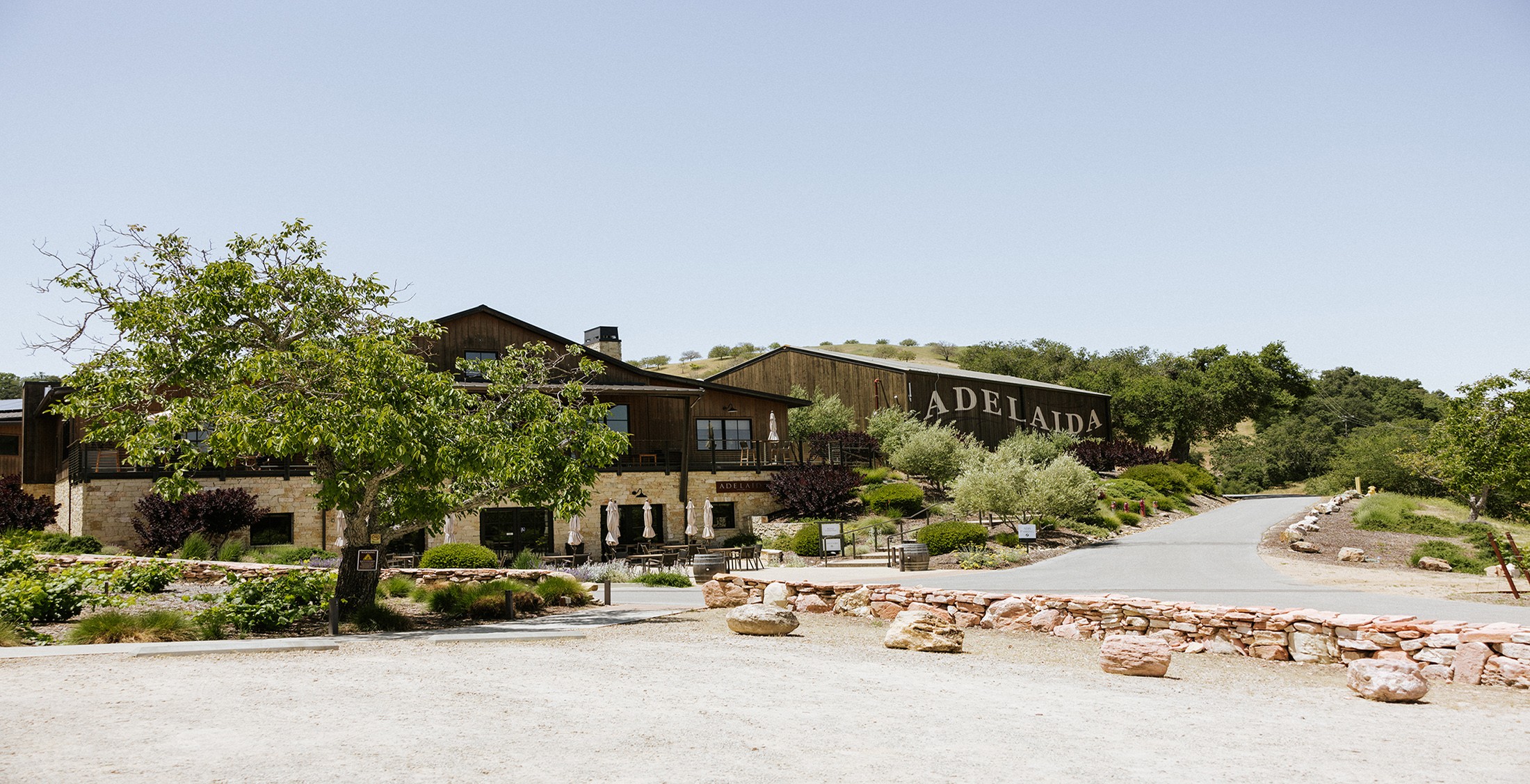
Adelaida Vineyards & Winery is the pilgrimage stop — home to the HMR Estate Vineyard, where 35 acres of own-rooted Pinot Noir have grown at 1,600–1,735 feet since 1964. The 2021 HMR Pinot Noir earned 95 points from Wine Advocate; the 2022 vintage was called “Burgundy by way of Paso” by James Suckling (92 points). Multiple tasting tiers are available: Classic ($25), Signature ($50), and a spectacular Hilltop Tasting at 2,320 feet under heritage oaks.
Open: Wednesday–Monday, 10AM–4PM (closed Tuesday). Reservations recommended
Phone: 805-239-8980.
Bonus stop — Tablas Creek Vineyard produces the “Full Circle” Pinot Noir from a 2.5-acre vineyard surrounding founder Robert Haas’s home in the Templeton Gap — one of Paso’s coolest microclimates. At roughly 475 cases per vintage, it’s tiny. The 2021 scored 93–95 points from Wine Advocate. The name reflects Haas’s career arc: from introducing America to Burgundy, through decades of Rhône varieties, back to Pinot Noir at home.
Sunday Lunch Near the Wineries
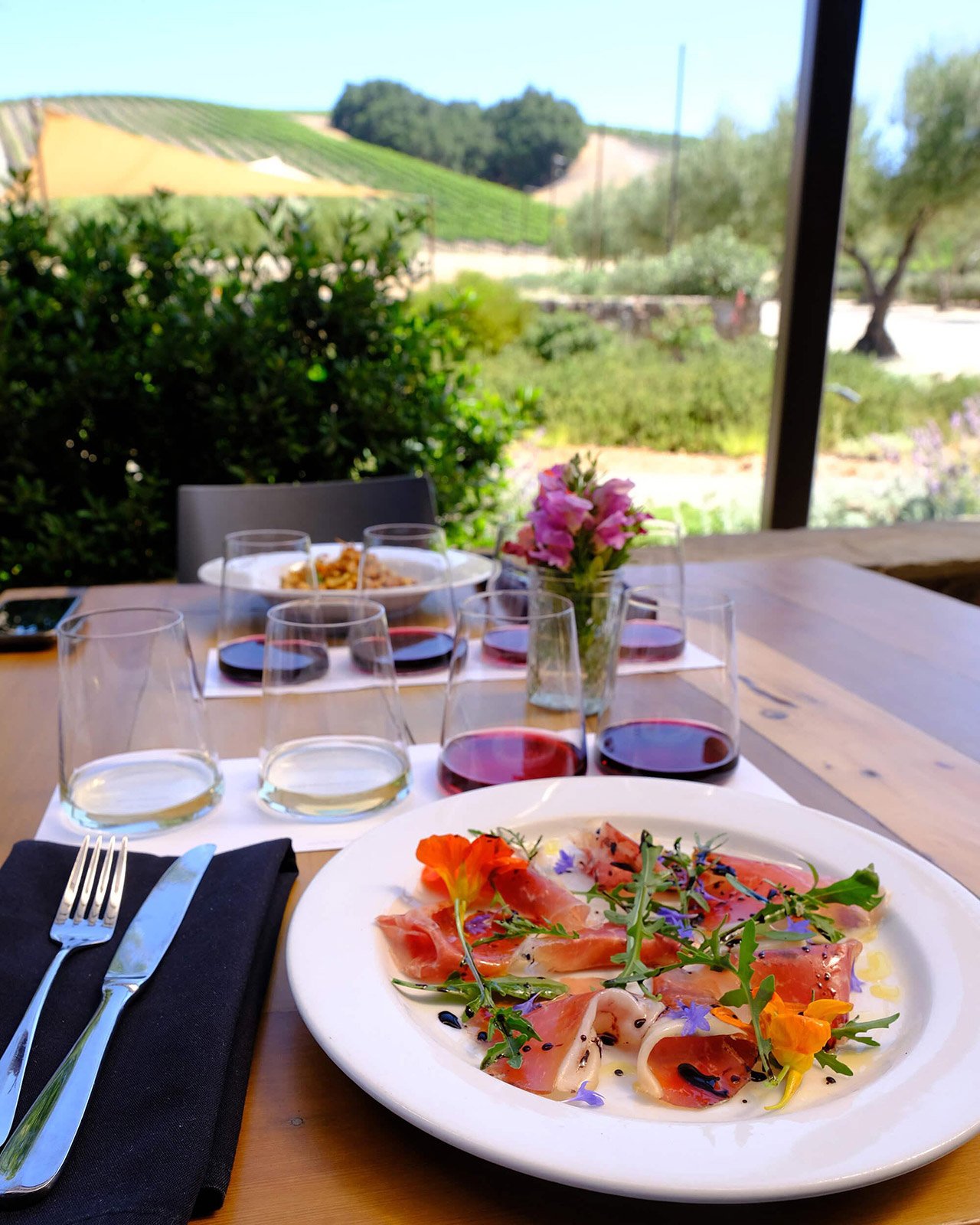
Pier 46 Seafood Market & Restaurant in Templeton is the practical choice — fresh, casual, quick, and perfectly positioned between westside stops. Ahi tacos, fish and chips, and lobster rolls won’t overwhelm your palate. Niner Wine Estates on the westside offers a more elevated experience: seasonal wine country cuisine with vineyard views, combining lunch and a tasting stop. Kitchenette in downtown Templeton works for an earlier brunch-style meal (creative pozole verde, breakfast tacos) before the first winery opens.
Routing, logistics, and what to know before you go
Day 1 is entirely walkable downtown — park near City Park and all four tasting rooms plus lunch sit within a few blocks. Arrive before 11 a.m. on Saturday for easy parking; afternoons get congested.
Day 2 requires driving between westside estates spaced 5–15 minutes apart along Vineyard Drive, Peachy Canyon Road, Adelaida Road, and Bethel Road. Roads are scenic but winding with elevation changes — allow extra time beyond GPS estimates.
For those preferring not to drive, Uncorked Wine Tours and Toast Tours offer private tours, hotel pickup and customizable itineraries. Please note that rideshare services like Uber are unreliable in rural westside areas.
Weekend reservations are strongly recommended at all wineries, especially for groups of four or more. Book through Tock (used by Cordant, Écluse, Adelaida, Jack Creek, Hayseed and Housdon) or call directly. Restaurant reservations for Saturday lunch downtown are wise. Bring layers — that famous 40–50°F temperature swing means mornings can be cool even when afternoons are warm. A cooler in the car protects wine purchases from afternoon heat.
What Makes this Trip Worth Taking?
This itinerary delivers something no other California wine region can quite match: the chance to taste Pinot Noir from a place still proving itself. Paso Robles Pinot stands apart from Russian River’s lush cherry-cola richness, Sta. Rita Hills’ nervy acidity, and Santa Lucia Highlands’ wind-driven intensity.
The combination of extreme diurnal swings, calcareous limestone soils, and marine fog infiltration produces wines with ripe dark fruit, mineral backbone, and an acid brightness that defies the warm-climate label. With over 60 years of history (dating to Dr. Hoffman’s 1964 plantings and Tchelistcheff’s endorsement), a 16-fold increase in plantings since the 1990s, and scores now reaching 95 points from major critics, Paso Robles Pinot Noir is no longer an experiment. It’s a story still being written — and tasting it at the source, from producers who believe in it passionately, is what makes this two-day trip genuinely special.
Cover photo courtesy of Jack Creek Cellars