You’ve booked the hotel, mapped out a few wineries, and now a quiet question is creeping in: What am I supposed to actually do when I get there? If you’re new to wine tasting etiquette in Paso Robles — or wine tasting anywhere — that uncertainty is completely normal. The good news is that Paso Robles is one of the most welcoming wine regions in California, and the real etiquette is simpler than you think.
This guide covers everything a first-timer needs to know: how to taste, what to say, when to spit, what to wear, and the handful of unwritten rules that will make your experience smoother. No wine expertise required.
What to Expect at a Paso Robles Tasting Room
Paso Robles has more than 200 tasting rooms, and they range from grand estate properties with vineyard panoramas to converted warehouses in Tin City where you can hear the winemaker working in the next room. The format varies, but a typical tasting works like this:
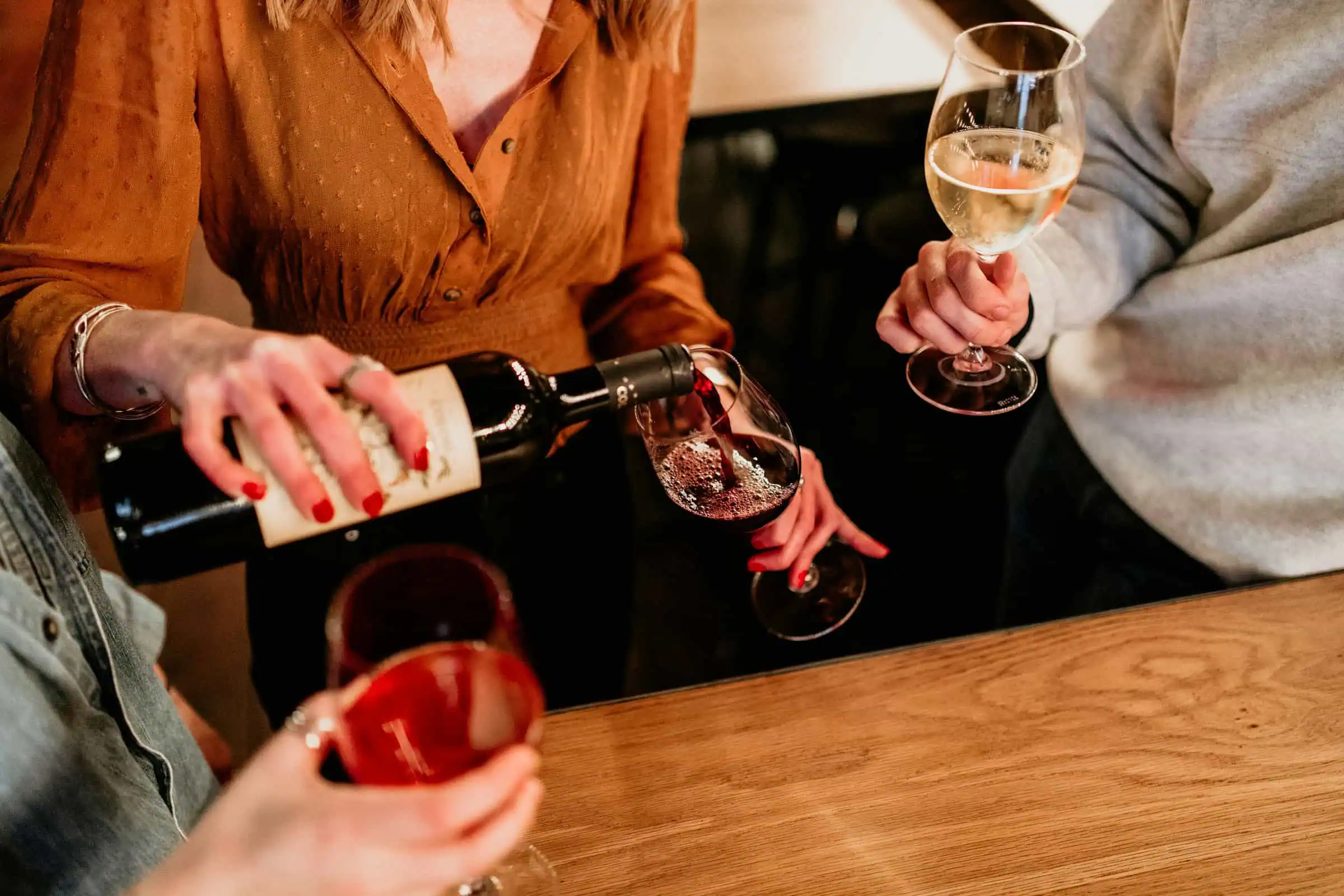
You check in at the bar or host stand, pay a tasting fee (typically $15–$40 per person, though some tasting rooms offer complimentary pours), and receive a flight of four to six wines poured in small samples. A staff member — often called a pourer, host, or wine guide — walks you through each wine, explaining what you’re tasting and answering questions. Most tastings take 30 to 45 minutes, though seated reservations at some estates run longer.
Some tasting rooms are walk-in friendly and others require reservations. The safest approach: check the winery’s website before you go, especially on weekends and during peak season (May through October). If you’re visiting downtown Paso Robles tasting rooms, walk-ins are more common. Out on the Westside or Eastside estates, a reservation is often expected.
How to Taste Wine: Swirl, Sniff, Sip
You don’t need to perform a ritual — but a basic three-step approach will genuinely help you taste more.
Swirl the wine gently in your glass. This isn’t pretension — it aerates the wine and releases aromatic compounds. Hold the glass by the stem (not the bowl, which warms the wine) and give it a few circular motions. If you’re worried about spilling, keep the base on the table and swirl from there.
Sniff before you sip. Bring the glass to your nose and take a slow inhale. You might catch fruit, spice, oak, flowers, or earth. Don’t worry about naming every aroma. The goal is simply to notice what’s there — your palate picks up far more when your nose is involved.
Sip a small amount and let it sit on your tongue for a moment before swallowing. Notice how the wine feels: is it light or full-bodied? Smooth or grippy? Does the flavor change from the first impression to the finish? These observations are more useful than trying to identify “notes of blackcurrant and pencil shavings.”
That’s it. Swirl, sniff, sip. Everything else is personal preference.
To Spit or Not to Spit
Every serious wine professional spits, and every tasting room provides a dump bucket (sometimes called a spit bucket or a rinse pitcher). Spitting is not rude — it’s smart, especially if you’re visiting three or more wineries in a day.
Here’s the practical math: if you swallow every pour across a six-wine flight at four wineries, that’s the equivalent of roughly three full bottles of wine. Your palate dulls, your judgment fades, and your afternoon becomes a write-off.
You don’t have to spit every pour. A reasonable approach for a day of tasting: swallow the wines you love, spit the ones you’re sampling but don’t need to finish, and pour anything you’re not interested in into the dump bucket. No one will be offended.
If you’re driving between wineries — and most Paso Robles itineraries involve some driving — designate a driver or book a guided wine tour so everyone can enjoy the tastings safely.
How to Talk to Your Pourer
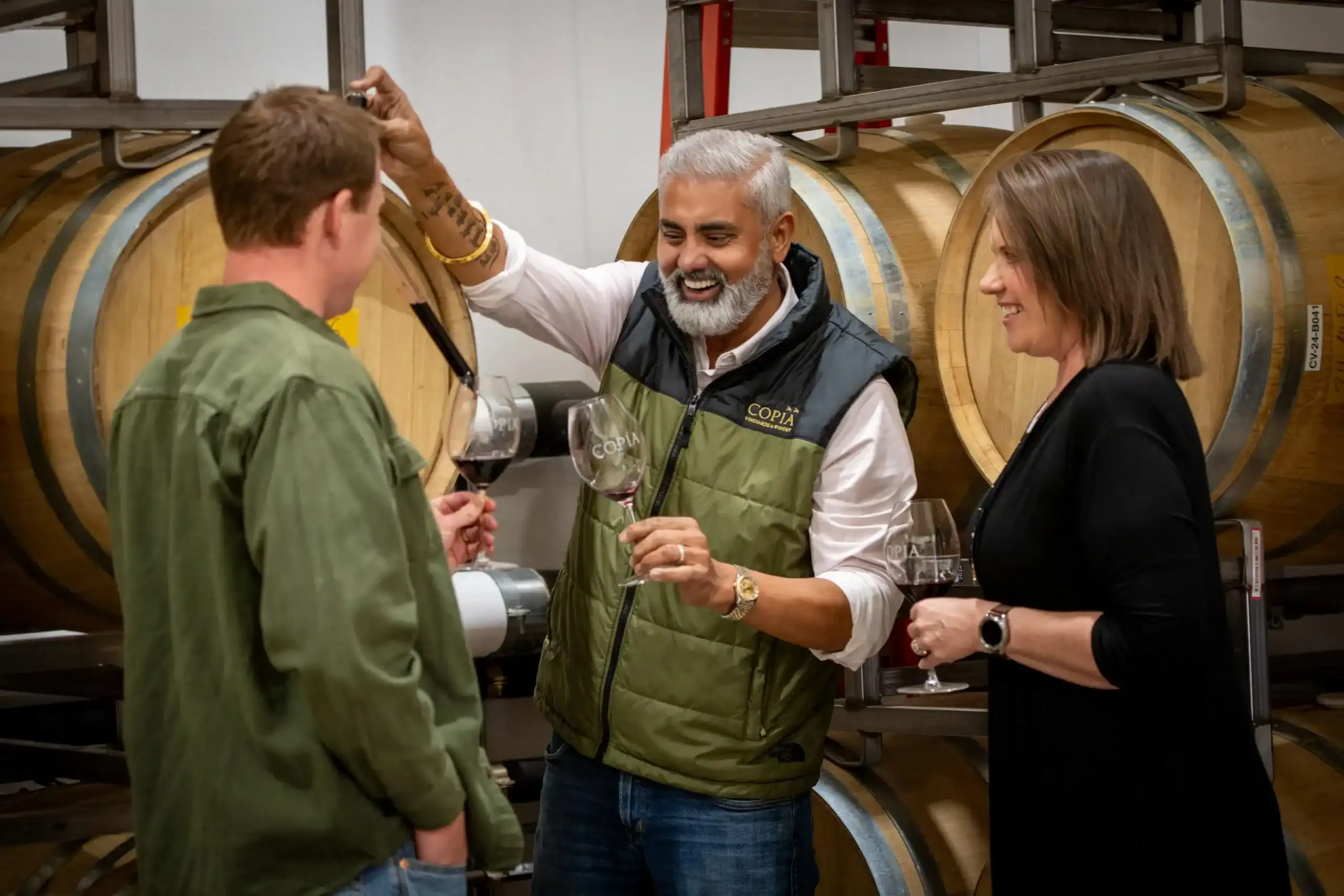
Your pourer is there to help you, not test you. The best thing you can do is be honest about what you know and what you like.
Useful things to say:
“I usually drink reds but I’m open to trying whites.” This gives your pourer a starting point without committing you to anything.
“What’s your favorite wine on the list?” Most tasting room staff genuinely love their wines and will give you an honest, enthusiastic answer. This is almost always more helpful than reading a tasting menu cold.
“I’m not sure what I’m tasting, but I like this one.” You don’t need wine vocabulary to express a preference. Saying “this is good” is a perfectly valid tasting note. If you want to go further, try describing what you feel — “this is smooth” or “this has a bite at the end” — rather than reaching for jargon.
What to say if you don’t like a wine:
You’re not obligated to finish any pour. A simple “this one isn’t quite for me” is all you need. You can also just set the glass aside or pour it into the dump bucket. Pourers encounter this dozens of times a day — it’s completely expected.
What you should avoid: saying the wine is bad, comparing it unfavorably to another winery’s product, or making the pourer feel they need to defend the wine. A polite pass is all it takes.
Wine Tasting Etiquette Tips for Paso Robles Visits
A few practical etiquette guidelines that will serve you well across any Paso Robles tasting room:
Skip the perfume or cologne. Strong fragrances interfere with your ability to smell the wine — and with everyone else’s. This is the one etiquette rule that tasting room staff genuinely care about.
Don’t feel pressured to buy. Tasting fees exist partly to compensate the winery for the experience. You are under no obligation to purchase bottles. That said, if you find something you love, buying direct supports the winery and often gets you pricing you won’t find in stores.
Tip if you’d like to, but it’s not mandatory. Tipping norms at Paso Robles tasting rooms vary. Some have tip jars, some don’t. A few dollars per person is a thoughtful gesture, especially if your pourer spent extra time with you or offered a special pour. At seated, reservation-only experiences, tipping $5–$10 per person is common. But no one will judge you either way.
Be mindful of your group size. If you’re visiting with more than four or five people, call ahead. Many tasting rooms have limited bar space, and a large group showing up unannounced can overwhelm a small staff. Some wineries charge higher tasting fees for groups above a certain size.
Pace yourself. Plan for two to four winery stops per day, not six or seven. You’ll taste more thoughtfully, enjoy each stop more, and remember what you drank. Paso Robles rewards a slower pace — the scenery between stops is half the experience.
What to Wear Wine Tasting in Paso Robles
Paso Robles is casual. This isn’t Napa — you won’t see dress codes at any but the most exclusive properties. Comfortable clothes you don’t mind getting a stain on are ideal. A few specifics:
Shoes: Closed-toe shoes with some traction if you’re visiting estate wineries with gravel paths or vineyard tours. Heels and white sneakers are both bad ideas on a working ranch.
Summer heat: Paso Robles regularly hits triple digits between June and September. Light layers, sunscreen, a hat, and a water bottle are non-negotiable. Plan your tastings for the morning when temperatures are manageable, and save air-conditioned downtown tasting rooms or Tin City for the afternoon.
Wine stains: Red wine on a white shirt is a rite of passage, not a disaster. Dark colors or patterns are practical choices.
Wine Club Pitches: What to Know
At the end of most tastings, your pourer will mention the winery’s wine club. This is standard — it’s how small wineries build their direct-to-consumer business, and the benefits (discounts, member events, library access) are often genuinely good.
You’re not obligated to join. A friendly “I’ll think about it” is a complete sentence. If you’re visiting multiple wineries in a weekend, it’s smart to wait until you’ve tasted across several producers before committing. Some clubs ship quarterly, some monthly, and minimum commitments vary — ask about the details before signing up, and make sure you understand the cancellation policy.
What It’s Perfectly OK Not to Know
If you take away one thing from this guide, let it be this: Paso Robles tasting rooms are staffed by people who chose this job because they love sharing wine with people who are curious enough to show up. They’re not looking for expertise. They’re looking for enthusiasm.
It’s OK not to know what an AVA is (it stands for American Viticultural Area — a designated wine-growing region with distinct characteristics). It’s OK not to know the difference between Syrah and Petite Sirah, or Grenache and Garnacha (they’re the same grape, different name). It’s OK to say you usually drink Pinot Grigio and you’re here to try something new.
The visitors who have the best time in Paso Robles are the ones who ask questions, admit what they don’t know, and let the pourers do what they do best: connect you with wines you’ll actually enjoy.
First-Timer Friendly Tasting Rooms in Paso Robles
Not sure where to start? These tasting rooms are especially welcoming to newcomers.
Eberle Winery
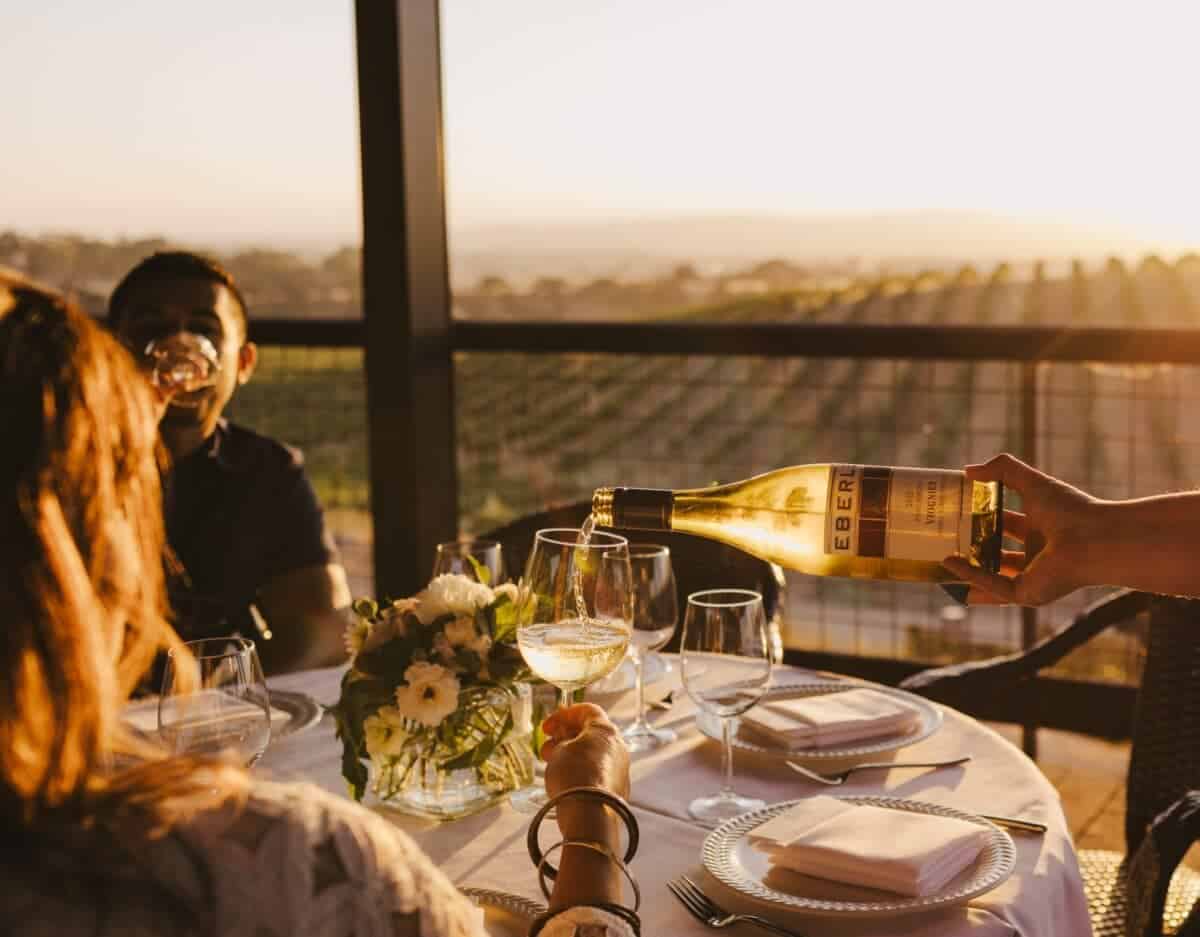
Eberle Winery on Highway 46 East offers complimentary cave tours — 16,000 square feet of underground wine caves that give first-timers an unforgettable introduction to how wine is made. The standard Vineyard Deck tasting (five wines plus a cave tour) is complimentary, one of the rare no-charge experiences in Paso Robles. The tasting room staff are known for their patience and warmth, and the estate Cabernet Sauvignon is a textbook Paso Robles red. Walk-ins welcome.
Address: 3810 Highway 46 East, Paso Robles
Hours: Daily 10am–6pm (summer); 10am–5pm (winter) — check website for seasonal hours

Calipaso Winery & Villa
Calipaso Winery runs a lively downtown tasting room right in the heart of Paso Robles, where you can settle in at the bar or the patio with a flight or glass of their estate wines. The vibe is warm and unpretentious — live music on weekends, no reservations needed, and hours that run later than most. If you want the full estate experience, the Calipaso Villa at 4230 Buena Vista Dr offers on-site accommodations and Sunday brunch among the vineyards.
Address: 809 13th St, Paso Robles (downtown tasting room)
Hours: Sunday–Wednesday 12pm–7:30pm; Thursday–Saturday 12pm–9:30pm
Cass Winery
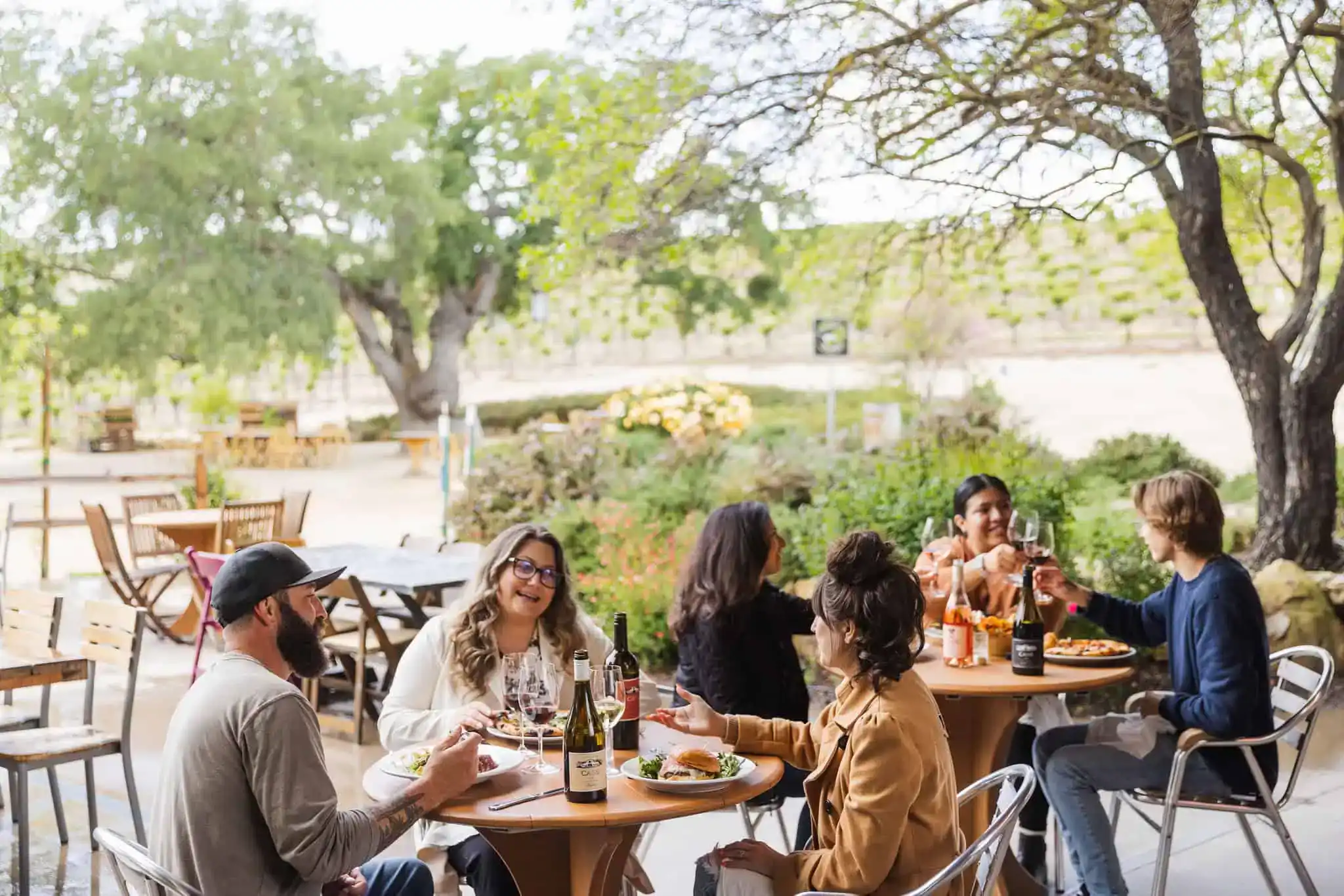
Cass Winery pairs wine with food better than almost any property in the region. The on-site Café at Cass serves lunch daily, making it a natural stop where you can combine a tasting with a meal. The vibe is relaxed and the grounds are beautiful — a great place to slow down and enjoy the afternoon.
Address: 7350 Linne Road, Paso Robles
Hours: Daily 11am–5pm (check website for current hours)
Local Tip: If you’re building a first-timer itinerary, start at a welcoming Eastside winery like Eberle or Cass in the morning, then head to downtown Paso or Tin City for the afternoon. The winery map makes it easy to plan your route.

Ancient Peaks Winery
Ancient Peaks Winery sits on the 14,000-acre Santa Margarita Ranch — one of the most scenic settings in the region and a place where first-timers immediately feel the scale and openness of Central Coast wine country. The tasting room and café are casual and welcoming, the staff are patient with newcomers, and the vineyard tour (by reservation) takes you through vines planted on a property with a history stretching back to the 1770s. The Zinfandel and Cabernet Sauvignon are approachable crowd-pleasers.
Address: 22720 El Camino Real, Santa Margarita
Hours: Daily 11am–5pm (check website for current hours and tour availability)
Your First Tasting Will Be Better Than You Think
The secret most first-timers discover by their second pour: nobody is watching, nobody is judging, and the only wrong way to taste wine is to not enjoy it. Paso Robles earned its reputation as a friendlier, more approachable alternative to Napa, and that reputation starts in the tasting room.
Show up curious, ask questions, spit when you need to, and trust your own palate. The rest takes care of itself.
Ready to plan your first visit? Browse the full winery directory or explore beginner-friendly itineraries to build your trip.