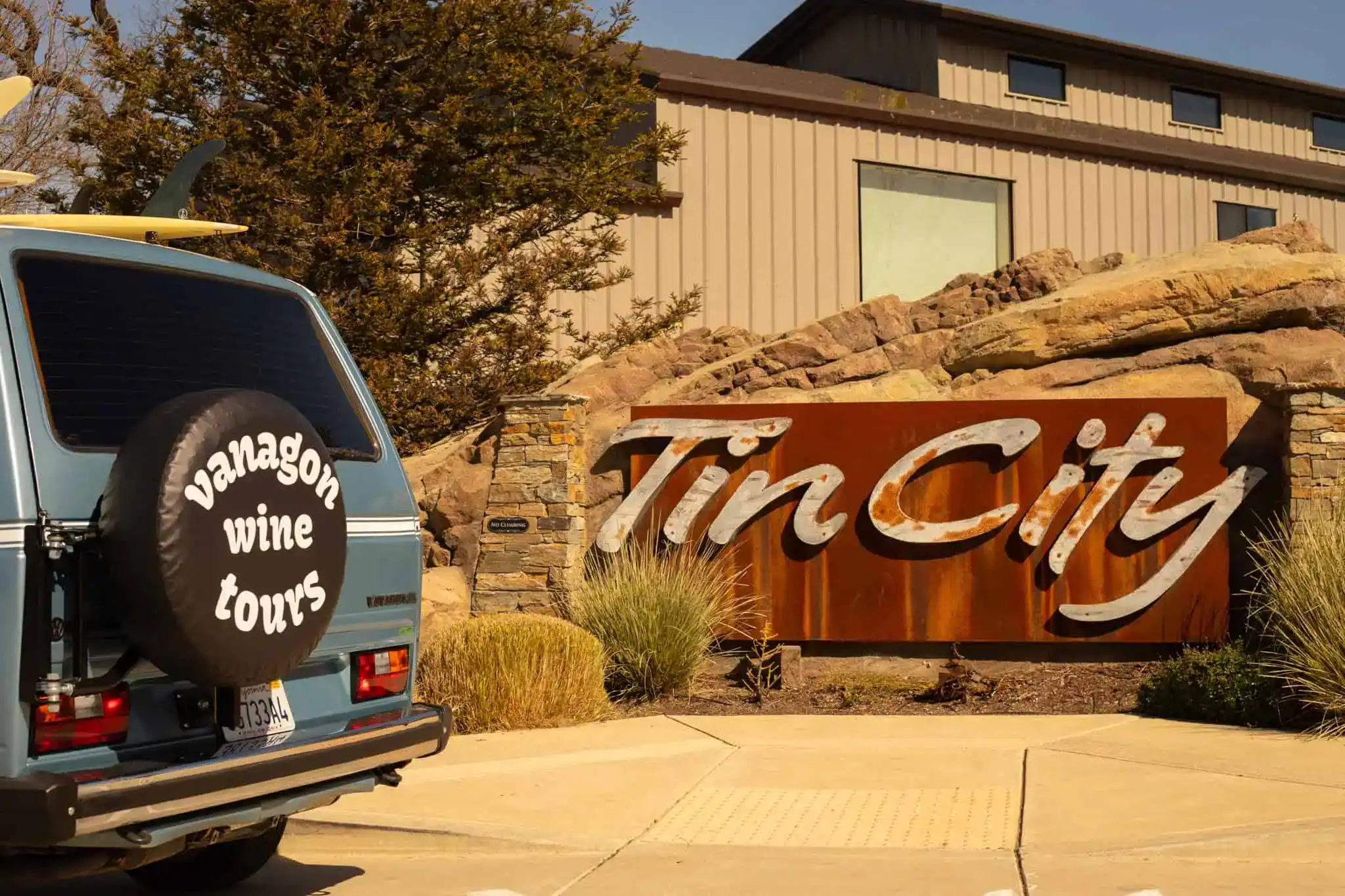
The walkable warehouse district where Paso’s most interesting small-batch winemakers, cider makers, and distillers share walls — and why it belongs on every wine country itinerary.
On a weekday afternoon in Tin City, you might follow the smell of fermenting cider past a row of corrugated tin doors, duck into a tasting room that seats twelve people on mismatched stools, and walk out an hour later with a bottle of 200-case Grenache and the winemaker’s cell number. That is Tin City Paso Robles — a repurposed industrial district off Ramada Drive that has quietly become one of California wine country’s most compelling afternoons.
Located about 1.5 miles from the downtown square, Tin City holds more than 40 businesses: wine tasting rooms, a cidery, breweries, distilleries, and restaurants. Most of them are independent. Most are making something you won’t find in any liquor store. This guide covers who to visit, what to taste, how to get there, and how to fit Tin City into a full Paso Robles trip.
What Is Tin City, Exactly?
Tin City is a repurposed light-industrial complex — warehouses with corrugated metal siding, hence the name. Beginning around 2013, winemakers and beverage producers started claiming production units as tasting rooms. Rents were affordable. The buildings were functional. The location was close enough to downtown to capture foot traffic without the overhead of a Paso Robles Street storefront.
What grew up there wasn’t a planned wine district. It was an accidental creative cluster. Without the overhead of an estate, makers could experiment freely. Without a formal tasting room staff trained to upsell, they could talk to visitors on equal terms. The format selected for authenticity over polish, and the visitors who discovered it kept coming back.
The result is a scene unlike anything else in Paso Robles wine country. Traditional estate wineries out on the Westside offer views and structured experiences. Downtown’s wine bars aggregate bottles from across the region. Tin City puts you directly in front of the people making the wine, in the building where it was made, often with a clear sight line to the actual tanks and barrels. For visitors who find the formal estate model intimidating — or who have done the Napa circuit and want something more real — Tin City offers a different entry point entirely.

The Tin City Paso Robles Producers Worth Your Time
Tin City has more than twenty wine tasting rooms. The following is a curated selection — the producers most worth building a visit around — rather than an inventory of every door you could open.
ONX Wines
ONX Wines is the natural starting point for most Tin City visits, and not simply because they’re easy to find. The winery focuses almost entirely on Rhône varieties — Grenache, Syrah, Mourvèdre and their blends — grown in the Templeton Gap District, where afternoon marine air funnels through a break in the Santa Lucia Range and drops temperatures 15 to 20 degrees compared to inland Paso. That temperature swing is why Rhône varieties thrive here: long hang time, preserved acidity, and a structural complexity that separates these wines from warmer-climate Syrah.
The Tin City tasting room pours a focused lineup and the team can walk you through the farming approach and which specific vineyard blocks contributed to each bottle. Their estate GSM blends are particularly worth asking about. ONX also operates three on-site lodging options — the Clark House, Kiler Canyon Ranch House, and Briarwood Cottage — for visitors who want to extend the stay into the vineyards themselves.
Address: 3030 Riverside Ave Suite 104, Paso Robles
Tin City Cider Company
Not everyone in your group wants to taste wine all afternoon — and Tin City Cider Company makes a genuine case for including cider in the rotation regardless. The cidery works with local California apples and stone fruit to produce sparkling ciders that are drier, more complex, and more site-specific than anything from a grocery shelf. They’re also a reliable landing spot for groups with divergent drink preferences: genuinely interesting for the non-wine person, and worth a glass even if Grenache is your primary agenda.
Desparada Wines
Desparada is the project of winemaker Vailia From’ and it earns its reputation as one of Tin City’s most consistently compelling addresses. The focus is on site-expressive, minimal-intervention wines — Grenache Blanc, Picpoul, Carignan, and other varieties handled with care rarely seen at this price point. Lee has a particular facility with white and rosé wines that hold genuine acidity through Paso’s warm summers.
If you’re interested in the natural wine conversation without the instability that plagues lesser producers in the genre, Desparada is worth building your visit around.
Levo Wine
Levo Wine is the kind of tasting room that rewards visitors who take their time. Production is genuinely small — annual case counts that make each bottle a rarity — and the wines reflect a winemaker more interested in individual vineyard expression than in making something easily categorizable. Grenache, Mourvèdre, and field blend reds rotate through the lineup with each vintage.
Walk-ins are generally welcome, but the room has limited capacity. Arriving earlier in the day tends to work better.
Giornata Wines
Giornata is the outlier in Tin City’s Rhône-heavy lineup, and that’s precisely the reason to stop. The winery works almost entirely with Italian varieties — Nebbiolo, Barbera, Vermentino, Sangiovese — grown in Paso Robles and Edna Valley. Winemaker Brian Terrizzi has been making the case for Italian varieties on the Central Coast for over a decade, and the wines increasingly make the argument themselves.
The Barbera is worth seeking out specifically: higher acidity, brighter fruit, and a food-friendliness that sets it apart from the Zinfandels and Syrahs dominating the surrounding tasting rooms. If your group is coming in from a meal or heading to one after, this is the pairing-minded stop.

Beyond Wine: Cider, Spirits, and Food
The name Tin City undersells the range. A single afternoon in the district can take you from a 96-point Rhône blend to a barrel-aged whiskey to a plate of wood-fired seasonal food without covering more than a few hundred feet.
Craft spirits are well represented. The distilleries operating in the district handle whiskey, gin, and agave-based spirits — worth a tasting flight if your afternoon is long and your curiosity extends beyond wine. The quality level is consistent with the rest of the district: small-batch, independent, worth your time.
Food is handled primarily by Etto Pasta Bar and Six Test Kitchen. When mid-day hunger grumbles, head to Etto for spaghetti and a show. Plus, Etto’s awesome market section allows everyone to bring a taste of Tin City home with freshly made pasta, sauces and Italian specialty ingredients.
For an unforgettable evening of farm-to-table fine dining, claim one of just twelve seats at Six Test Kitchen, open Wednesday through Saturday by reservation only. Here, Chef Ricky Odbert’s Michelin-starred creativity shines. Each thoughtfully crafted dish in the multi-course experience expresses Paso Robles’ seasons through cutting-edge preparation and pristine local ingredients. Yep, Tin City’s dining scene delivers experiences you won’t find anywhere else in wine country—or the world, for that matter. Reserve a Seat
How to Plan Your Tin City Paso Robles Visit
Getting There
Tin City is located off Ramada Drive near Paso Robles Street, about 1.5 miles southeast of the downtown square — a five-minute drive. Plugging “ONX Wines Tin City” or “Tin City Cider” into navigation will put you at the right cluster. On the Paso Robles wine tasting map, Tin City appears southeast of downtown, with the Westside estate wineries further out on Adelaida Road and Highway 46 West.
Parking
Free parking is available in the shared lot and along adjacent streets. On regular weekends, space is rarely an issue. The exception is October during Harvest Wine Weekend, when the area draws significantly heavier traffic — plan to arrive early or use rideshare during that window.
Hours and Walk-In Policy
Most Tin City tasting rooms welcome walk-ins, and that accessibility is fundamental to how the district works. You can arrive with no reservations and find multiple rooms ready to pour. That said, some producers offer seated or private experiences that require advance booking, and a few rooms with genuinely limited capacity appreciate a call ahead on busy weekends.
The practical rule: check individual winery websites before you go, particularly if you have specific producers on your list or you’re visiting during fall weekends. Hours change seasonally, and small producers sometimes close for private events or allocation releases.
How Long to Budget
Two to three hours is the realistic minimum for a Tin City visit worth having. Three tasting rooms and a lunch covers the district at a relaxed pace that lets the afternoon breathe. Four or five tasting rooms without sitting down for food works if you’re focused entirely on wine, though the tendency to rush diminishes what makes Tin City special. The informal atmosphere invites staying longer at rooms where the conversation is interesting.
What to Wear
Tin City is an industrial space: concrete floors, gravel paths, outdoor corridors between warehouses, occasional oak shade. Comfortable shoes matter considerably more here than at a formal estate. In summer, midday temperatures climb into the 90s and the walk between tasting rooms is fully exposed. The tasting rooms themselves are air-conditioned, but building a Tin City itinerary around the morning hours — before noon — is the smarter move June through September.
Tin City vs. Downtown Paso Robles: What’s Different
First-time visitors sometimes treat Tin City as a subset of downtown Paso Robles. It’s close enough geographically that the confusion makes sense, but the experience is meaningfully different — and understanding the difference helps you sequence your day.
Downtown Paso Robles offers wine bars, restaurants, tasting rooms that aggregate wines from across the region, and the energy of a main street wine town. It’s a good place to browse, eat well, and sample a cross-section of what Paso Robles produces.
Tin City offers something more specific: direct access to small producers in their production facilities, often with the makers present and pouring. The scale is intentional. Most of these wines don’t exist at enough volume to place them in restaurants or retail channels, which means visiting in person is the only reliable way to taste them.
Downtown and Tin City aren’t competing itineraries — they’re complementary. A Tin City morning followed by downtown lunch and afternoon shopping covers two very different parts of what Paso Robles offers. For a first-time visitor, starting at Tin City in the morning gives you context that makes the curated retail and bar scene downtown feel more meaningful afterward.
For a more detailed route, the downtown Paso Robles itinerary guide and the full Paso Robles itineraries page can help you sequence the day around your priorities.
Combining Tin City with a Full Paso Robles Weekend
Tin City works best as a half-day stop within a longer Paso Robles trip rather than the entire agenda. A few pairings that make geographic and tonal sense:
Tin City + Downtown: Tin City from 10am to 1pm, lunch at one of the restaurants near the downtown park square, afternoon at a downtown wine bar. Covers the full range of Paso’s urban wine scene without overlap.
Tin City + Westside: Tin City in the morning, then out Adelaida Road for afternoon tastings at estate wineries in the Adelaida District. The contrast between Tin City’s warehouse-scale intimacy and the pastoral Westside estates captures the breadth of what makes Paso Robles unlike anywhere else in California wine country.
Full Trip Planning: The complete winery directory covers all the producers across the region, and the itineraries hub has route-specific guides organized by theme, duration, and area.
Further Reading
Frequently Asked Questions: Tin City Paso Robles
What is Tin City in Paso Robles?
Tin City is a repurposed industrial district on Ramada Drive in Paso Robles, California, home to more than 40 businesses including 20+ wine tasting rooms, a cidery, craft breweries, distilleries, and restaurants. It’s known for small-batch wine production, walk-in-friendly tasting rooms, and direct access to independent winemakers in the facilities where their wines are actually made.
How many tasting rooms are in Tin City?
More than 20 wine tasting rooms operate in the district, alongside breweries, distilleries, and food businesses that bring the total to over 40. Most wine producers work in small quantities — annual case counts often in the hundreds — which is why their wines rarely appear outside the tasting room.
Is Tin City walkable?
Yes. The district is compact and built for foot traffic, with most tasting rooms within a short walk of each other along and around Ramada Drive. Comfortable shoes are recommended — surfaces are a mix of concrete and gravel, and the walk between buildings is part of the experience rather than an inconvenience.
Do I need reservations to visit Tin City tasting rooms?
Most Tin City tasting rooms welcome walk-ins. A few producers offer seated or private experiences that require advance booking — check individual winery websites before arriving, especially on fall weekends and during Harvest Wine Weekend in October.
When is the best time to visit Tin City Paso Robles?
Weekday afternoons offer the most relaxed experience: more time with the pourers and better access to limited-production wines. On weekends, arriving before noon or after 2pm helps avoid the midday peak. October’s Harvest Wine Weekend brings significantly heavier traffic across the whole region.
How far is Tin City from downtown Paso Robles?
About 1.5 miles — a five-minute drive or roughly a 25-minute walk. Most visitors drive. If you’re planning to taste freely at both Tin City and downtown, rideshare for the return leg is worth planning ahead for.
What is Tin City Paso Robles known for?
Tin City is known for housing a concentration of independent, small-batch wine producers who work out of warehouse-style facilities in a walkable cluster. The atmosphere is casual and direct — closer to a conversation with the winemaker than a formal tasting experience. It’s also home to some of Paso Robles’ most interesting natural wine producers, the region’s leading cidery, and a growing collection of craft spirits makers.
Tin City is one of those places that’s easier to understand once you’ve spent an afternoon in it. The industrial setting takes about five minutes to stop noticing, and what’s left is a series of genuine conversations about wine, fruit, and farming happening in the rooms where those choices were actually made.
Start at ONX Wines and follow your curiosity from there. Use the Tin City page on PasoRoblesWineries.net for a current listing of all tasting rooms in the district, and the full Paso Robles winery directory to plan the rest of your trip.