


Here’s the thing nobody tells you before your first Paso Robles wine tour: 270-plus tasting rooms sounds exciting right up until you’re staring at a map and realizing half a Saturday is already gone.
Paso Robles wine country covers an enormous geographic area — from Tin City’s industrial-chic tasting corridor downtown to the rugged hillside estates of the Adelaida District 20 miles west — and the gap between a great day and a scattered one is almost entirely planning.
The good news is that this is a solvable problem, and it breaks into two paths: you build your own route and drive yourself, or you hand the logistics to someone who does this professionally. Both approaches work beautifully. This guide explains how to do each, when one makes more sense than the other, and what every visitor should know regardless of which they choose.
Table of contents
The Self-Guided Paso Robles Wine Tour
Self-guided touring is ideal for groups that want total flexibility — the ability to linger at a winery you love, skip one that doesn’t excite you, and pivot at noon when you discover something unexpected. It rewards a bit of pre-trip planning but isn’t complicated once you understand the geography.
Start with the Wine Map
Before you do anything else, pull up the Paso Robles wine tasting map. The map immediately makes clear why “I’ll just drive around and see what we find” tends to go sideways: Paso is geographically large, the westside estates are spread far apart, and doubling back costs real time.
The map also shows you the two distinct characters of Paso wine country. The Eastside, anchored by Highway 46 East, is more accessible — a flatter terrain with clustered wineries, approachable to newcomers, and home to producers like Eberle Winery and Cass Winery. The Westside — particularly along Vineyard Drive, Adelaida Road, and Highway 46 West — delivers Paso’s more adventurous, rugged side, where limestone-rich soils and Pacific influence produce the wines that get the most critical attention. You almost certainly can’t do both in a single day without feeling rushed.

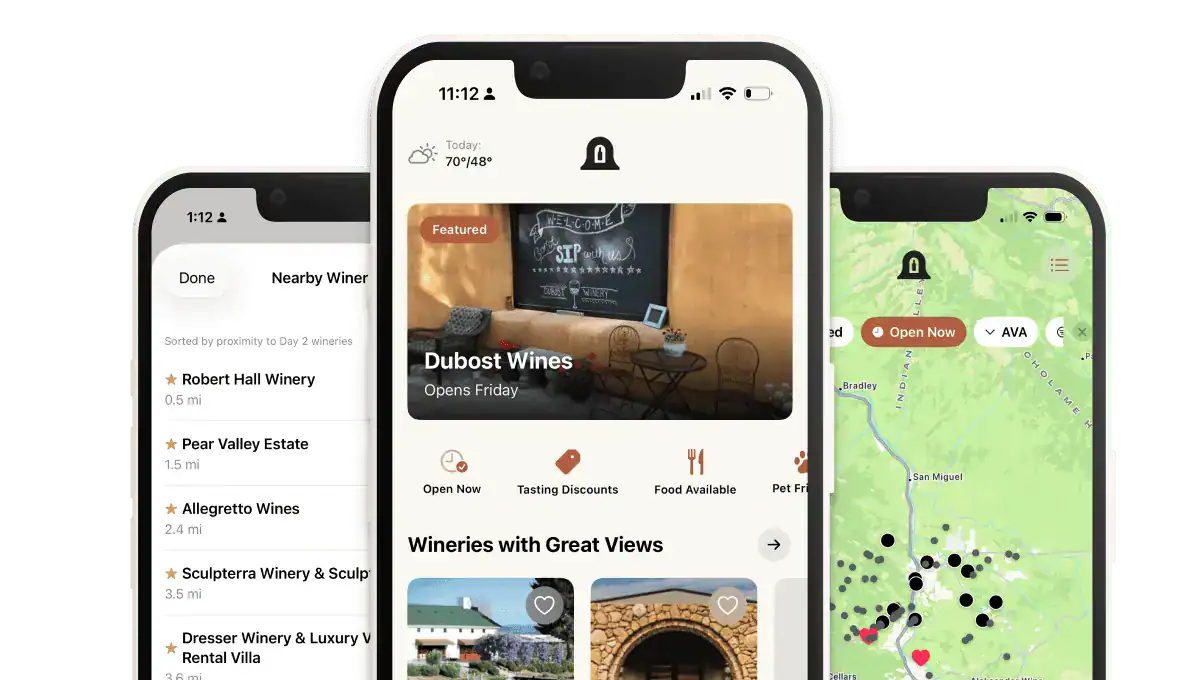
Take the Map With You: The Paso Wineries App
If you want the map in your pocket with a few extra layers of intelligence, the free Paso Wineries app is worth downloading before you leave home. Browse all 270-plus tasting rooms, filter by AVA district, and save the ones you want — the app groups your picks geographically so each day’s route stays tight without you having to calculate driving distances yourself.
It builds your itinerary automatically, caps each day at four wineries by design, and surfaces suggestions for nearby producers that fit naturally into your route. That last feature is where a lot of people find their favorite stop of the trip.
What makes it genuinely useful mid-trip is the “Open Now” filter: one tap shows every winery currently accepting visitors, no guessing from a website with outdated hours. Directions, phone numbers, and booking links are all cached to your phone — which matters on the westside, where cell service gets patchy on mountain roads. It’s free, requires no account, and takes about two minutes to set up. Worth doing the night before you arrive. Download it here.
Pick a Zone and Commit
The most common mistake first-timers make is trying to cover too much ground. A well-paced day is three to four wineries. Four to five if you’re efficient and skip lunch or eat at a tasting room with a food program.
For a first visit, downtown Paso and Tin City is the easiest self-guided route. You can walk between tasting rooms, park once, and cover a remarkable range of styles within a few blocks. Tin City alone holds a dozen micro-producers — the kind of 500-case-a-year operations that would be invitation-only in Napa — and the Ramada Row section has added significant new talent in recent years, including Ridge Vineyards’ first Paso outpost.
For visitors coming back for a second trip, or anyone specifically chasing Paso Robles’ Rhône or Cabernet reputation, head west. Block out a full day for the Adelaida District, build in driving time between estates, and make reservations. Several of the most celebrated producers — Brecon Estate, ONX Wines, Copia Vineyards — require or strongly recommend booking ahead.
The Practical Self-Guided Checklist
Reserve in advance. At least half of Paso’s best westside tasting rooms require reservations, and weekend slots fill quickly from April through November. Book at least a week out during peak season; two or three days can work for a midweek trip.
Plan for a designated driver. This isn’t optional. Paso’s westside roads are narrow and winding, and even a moderate day of tasting adds up. If your group doesn’t have a natural non-drinker, budget for a driver service or a rideshare for the westside leg of your trip.
Arrive by 11am. Most tasting rooms open between 10am and 11am, and the last seating at estate wineries often closes by 4pm or 4:30pm. A late start costs you options.
Use the winery directory to shortlist. Filtering by neighborhood, wine style, or features like outdoor seating or food programs turns 270 options into a manageable list of eight you might actually visit.
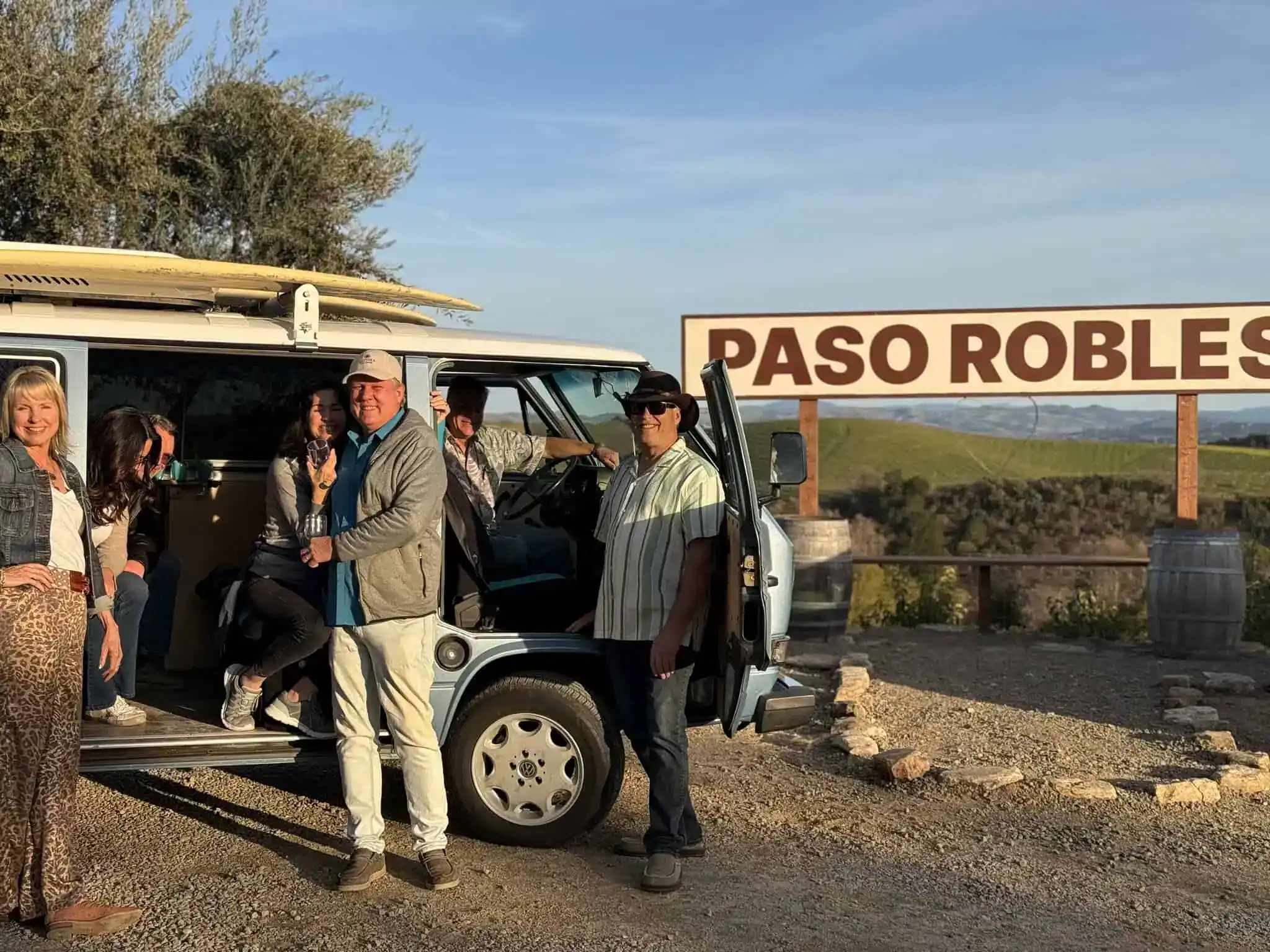
Guided Wine Tours in Paso Robles
At a certain point, the practical constraints of a self-guided tour become friction: someone in your group doesn’t drink and has been quiet about it, parking at the third winery is a nightmare, and you’re calculating whether anyone is over the limit. This is exactly what guided wine tours solve.
The best Paso Robles wine tour operators don’t just drive. They bring context that genuinely changes what you get out of a tasting — knowing which wineries are pouring library wines that day, which winemakers are on-site and worth asking questions, which bottle to pull off the shelf that isn’t on the tasting menu. That kind of local intelligence takes years to build.
Breakaway Tours
Breakaway Tours has been running wine tours out of Paso Robles since 1995, making them the longest-running wine tour operator on the Central Coast. Owner Jill Tweedie is a Level I Sommelier (Court of Master Sommeliers) and Level II WSET certified — credentials that show up in how their tours are structured. This isn’t a shuttle service with wine stops; it’s wine education woven into a curated itinerary.
Breakaway specializes exclusively in private, bespoke tours built around your preferences. They’ll start with a conversation about what you like and what you want to learn, then hand-craft an itinerary — which might include a distillery visit, a winery dinner, or a zip line over the vineyards for a group that wants something different.
Fleet ranges from luxury SUVs for smaller groups to mini coaches and full-size coaches for larger corporate groups, so the logistics scale to whatever you need. Five-star Yelp and TripAdvisor ratings across hundreds of reviews suggest the experience holds up consistently.
Best for: Groups who want wine education, couples, corporate events, anyone who wants a fully curated and managed day.
Book: pasorobleswineries.net/tour/breakaway-tours or call (805) 783-2929.
Central Coast Transport
Central Coast Transport takes a different approach. Their foundation is luxury transportation — specifically a Mercedes Sprinter Van fitted with executive seating, Wi-Fi, tablets, and champagne service built in from the moment you step aboard — and the wine tour experience builds out from there.
If Breakaway Tours is the guided educational experience, Central Coast Transport is the elevated concierge service. Their team handles the full trip: working out which wineries fit your preferences, coordinating dining reservations, managing timing so nothing feels rushed. The target is guests who want an exceptional, seamless day with a high-touch feel throughout.
They’re also useful beyond wine touring — airport transport from Paso Robles Regional, FBO tarmac service for private aircraft, and connected planning across lodging and restaurants. For visitors flying in or staying at a higher-end property who want everything coordinated in one place, this is the right call.
Best for: Groups and couples seeking a premium, full-concierge experience; couples celebrating a special occasion; travelers arriving by private aircraft.
Book: pasorobleswineries.net/tour/central-coast-transportation or call (805) 400-5218.
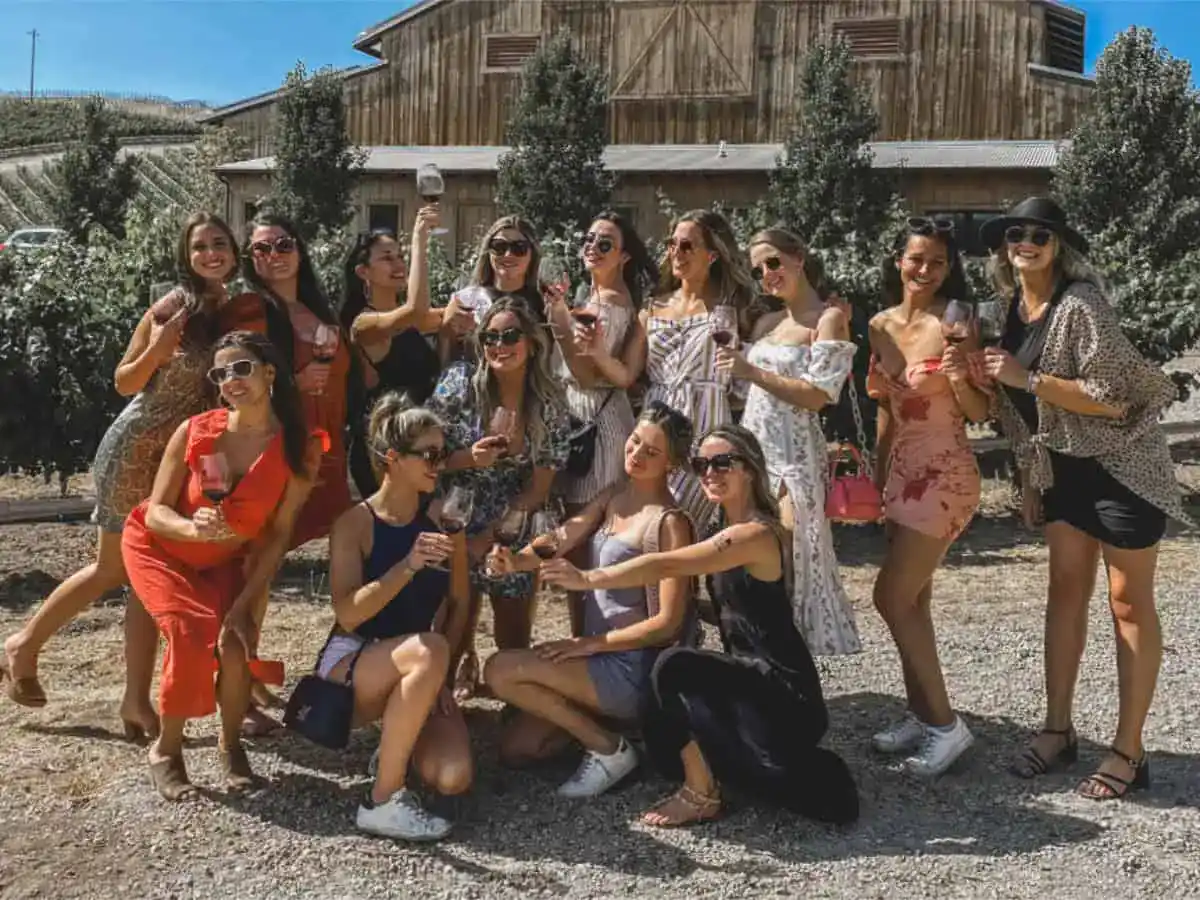
Toast Tours
Toast Tours was founded by Lars Bruinink and Kristina Horton, a Dutch-American couple who spent years as professional wine guides in Barcelona, Napa, and Sonoma before settling in Paso. That international background shapes how they run a tour — less a shuttle service with tasting stops, more a guided education in what makes this region tick. USA Today’s readers ranked them among the second best wine tour companies in the country in 2026, and Travel + Leisure has listed them among California’s top operators. Tours are private and fully customizable, accommodating two to fifteen guests in climate-controlled vehicles stocked with chilled water and enough cargo space for whatever you pick up along the way.
Beyond the standard wine tour, Toast runs a popular Tin City walking tour and a Hearst Castle combination day that pairs a historic site visit with afternoon tasting — a good option for groups where not everyone is a dedicated wine person. Tasting fees and lunch can be added on, and their concierge planning service is available separately for groups who want itinerary help without hiring a driver.
Best for: Groups who want wine education with an international perspective; mixed groups that want more than just wineries; couples and small parties looking for a fully private, structured day.
Book: Book online here or call (805) 400-3141.

Uncorked Wine Tours
Uncorked Wine Tours has been running since 2010, founded by Paso native Katie Hayward — and the local roots show in how the company operates. Itineraries are built entirely around the group: you can bring a list of wineries you’ve already shortlisted, ask for Katie’s recommendations based on what you like to drink, or mix wine stops with brewery visits, olive oil tastings, or a zip line over the vineyards. Door-to-door pickup is standard, and the vehicles accommodate one to fourteen guests. Yelp ranks Uncorked the top wine tour company in Paso Robles, with all five-star reviews across Yelp, Google, and TripAdvisor — and USA Today readers also placed them among the five best in the country.
Pricing is handled by quote based on your group and itinerary, so it’s worth contacting them directly with your dates and what you have in mind.
Best for: Groups that want maximum flexibility and local knowledge; anyone who wants to build a completely custom day; visitors who’ve been before and want to go deeper.
Book: pasorobleswineries.net/tour/uncorked-wine-tours or call (805) 459-4500.
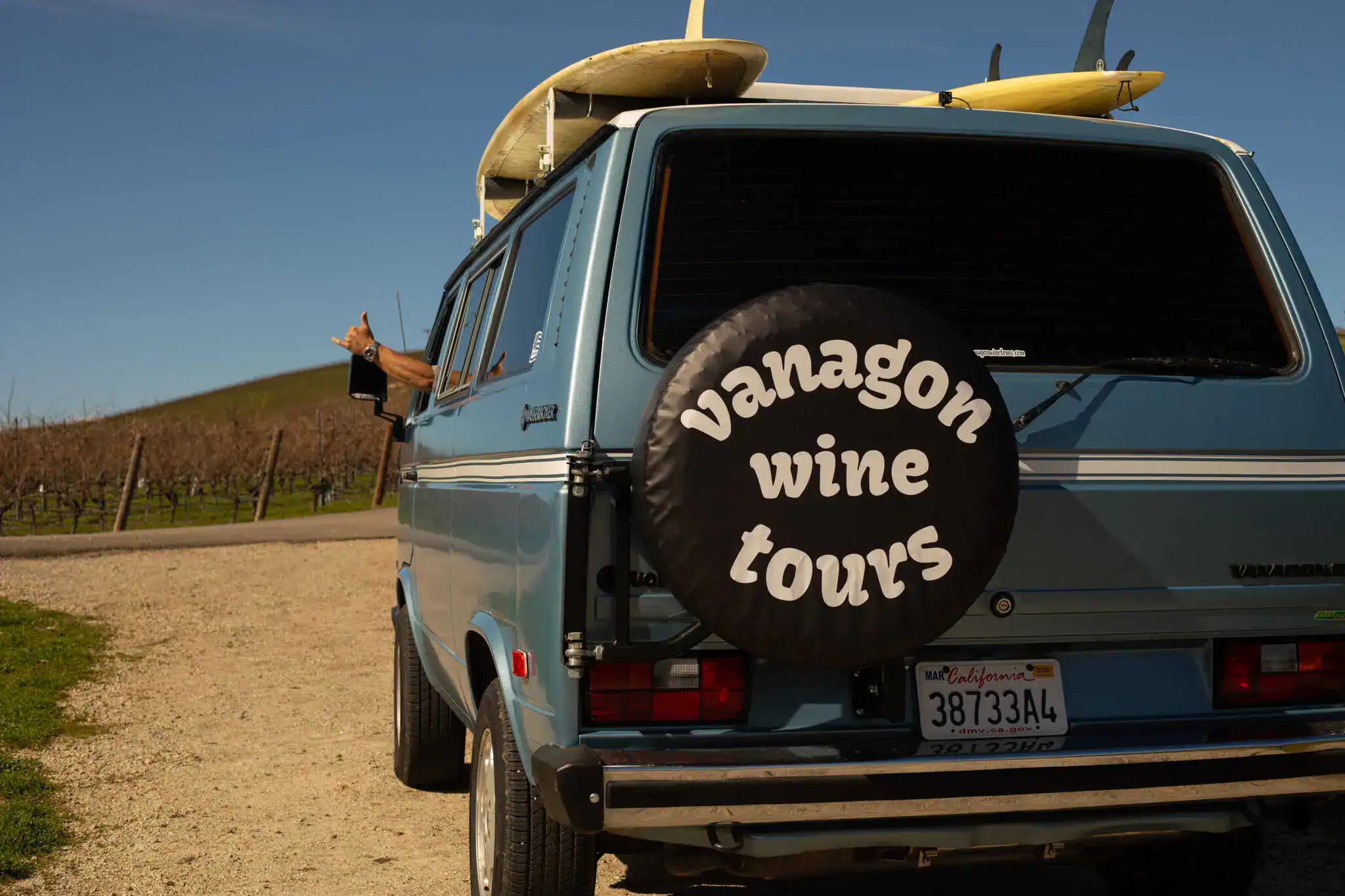
Vanagon Wine Tours
Vanagon Wine Tours is about the experience from the moment you step in. Matt and Dakota — a veteran-owned, husband-and-wife team based out of Templeton — run fully private all-day tours through Paso Robles wine country in “Old Blue,” a restored classic Volkswagen Vanagon with modern reliability upgrades, passenger-controlled A/C, and face-to-face bench seating for up to six guests. It’s a different energy than a Sprinter van: the close quarters and the van’s personality tend to get people talking, and that’s entirely the point.
Door-to-door pickup runs throughout Atascadero, Templeton, and Paso Robles, and the whole experience is private — your group, your itinerary, your pace.
Best for: Small groups and couples who want a private, personality-driven tour with genuine local knowledge; anyone who’d rather ride in a classic VW than a charter van; groups celebrating a special occasion.
Book: pasorobleswineries.net/tour/vanagon-wine-tours or call (805) 550-1062
Guided vs. Self-Guided: Which Makes Sense for You?
Neither option is inherently better — they serve different trips and different groups. Here’s the honest framework, cost included.
The real cost comparison. A self-guided day visiting four wineries runs roughly $100–$180 per person in tasting fees alone — add gas, lunch, and the reality of a sober driver, and a self-guided day for two people lands around $250–$400 total before anyone buys a bottle to take home. A guided group tour with Breakaway Tours starts at $109–$129 per person and includes a gourmet picnic lunch — genuinely comparable once you account for food and gas, and everyone gets to drink. Private tours with an operator like Central Coast Transport run $400–$700+ for the vehicle, but split across four to six people the per-person math often lands under $150 each. The cost gap narrows fast for groups of three or more; for solo travelers or couples on a tight budget, self-guided still wins on price.
By group size:
– Two people: self-guided works if one person genuinely wants to drive; otherwise a guided group tour at $109–$129 per person is the more cost-effective call.
– Three to four: the sweet spot for guided tours — per-person cost on a private tour drops meaningfully, and one designated driver for four tasters gets logistically awkward fast.
– Five to eight: guided is almost always the better call. Parking multiple cars at small tasting rooms and keeping a group together between stops becomes a full-time job otherwise.
– Nine or more: guided, full stop. Most Paso tasting rooms seat 8–12 people and westside lots hold maybe six cars.
Go guided if:
– Your group wants to drink fully without anyone holding back as the driver
– You’re visiting Paso for the first time and the geography feels overwhelming
– You want expert curation — someone who knows which winemakers are pouring exceptional library wines that week
– You’re planning a special occasion: anniversary, bachelorette, milestone birthday, corporate retreat
– Your group is larger than four or five people and coordinating multiple cars sounds like work
Go self-guided if:
– You’ve been to Paso before and have specific wineries in mind
– Someone in your group doesn’t drink or is happy to drive
– You want maximum flexibility to linger, pivot, and explore without a schedule
– You’re visiting midweek in the off-season, when reservations are easy and roads are quiet
– You enjoy the research and planning as part of the trip
The hybrid approach. If you’re spending two or more days in Paso Robles, consider doing both. Use a guided tour for day one — it gives you orientation, insider recommendations, and a shortlist of places worth revisiting — then self-guide day two to follow up on what excited you most, at your own pace, with the geographic confidence you picked up the day before. Day one with Breakaway Tours or Central Coast Transport covers the westside estates you’d struggle to navigate alone; day two, walk Tin City or downtown at your leisure.
For a first visit, the honest answer is usually: consider guided, at least for one day. The cost difference between a well-run guided tour and what you’d spend driving yourself is smaller than most people expect.
Practical Tips That Apply to Any Paso Robles Wine Tour
Pace yourself between pours. Paso’s wines tend toward higher alcohol than you might expect — many Cabernets and Rhône reds land above 14.5%. The standard tasting pour is small, but over five or six wineries it accumulates.
Eat before you go. Starting a wine tour on an empty stomach is a reliable way to cut the day short. A solid breakfast or early lunch pays dividends. Several Paso wineries have food programs worth planning around — check the wineries with food guide before you build your itinerary.
Build your route geographically. Whether guided or self-guided, starting from the furthest point and working back toward town is almost always smarter than criss-crossing the map. For westside tours, heading out to Adelaida or the Willow Creek District first, then stopping in Tin City or downtown on the way home, saves 20–30 minutes of driving.
April through October fills fast. Paso Robles high season runs roughly April through November, with Harvest Wine Weekend in October being the single busiest event on the regional calendar. If you’re visiting in spring or fall, book guided tours at least two to three weeks in advance and reserve tasting rooms as soon as you know your date.
Dress for temperature swings. Paso Robles afternoons in summer can reach 100°F, but evenings cool quickly thanks to marine airflow through the Templeton Gap. If you’re doing a westside tour at elevation, bring a layer regardless of what the morning forecast says.
Planning Your Next Steps
Once you’ve decided on your approach, our itineraries section has curated day-by-day routes for different styles of visit — first-timers, wine-focused weekends, foodie trips, and more. The winery directory lets you filter by neighborhood, varietal, features, and partner status to shortlist the producers that fit your day.
For guided tours, reaching out to any of the companies listed above with your dates and group size is the best first step — All companies work best when they have a bit of lead time to tailor the experience.
However you go, Paso Robles rewards the visitors who arrive with a plan. The region is big enough that a little direction turns a good trip into a genuinely memorable one.
Frequently Asked Questions
How much does a Paso Robles wine tour cost?
Self-guided tasting fees typically run $25–$45 per person per winery, so a day visiting four stops averages $100–$180 per person before food and transport. Guided group tours with companies like Breakaway Tours start around $109–$129 per person including lunch. Private guided experiences vary by group size and length — contact operators directly for quotes.
Do I need reservations for wine tasting in Paso Robles?
For westside and Adelaida District wineries, yes — many require reservations and nearly all recommend them on weekends. Downtown and Tin City tasting rooms are generally more walk-in friendly. Book ahead whenever possible, especially April through November.
How many wineries should I visit in one day?
Three to four wineries is the sweet spot for a relaxed, enjoyable day. Four to five is possible with tight logistics. More than that and the experience tends to blur — the wineries you visit early will be more memorable than the ones late in the afternoon.
Is Paso Robles wine country good for beginners?
Paso Robles is genuinely beginner-friendly — the culture is warm and low-key compared to Napa, tasting fees are reasonable, and most tasting room staff are happy to slow down and explain what’s in the glass. If you’re new to wine tasting, consider a guided tour for your first visit: the educational layer makes the experience stick.
What’s the best time of year to visit Paso Robles wine country?
Spring (March–May) and fall (September–November) offer the best combination of weather, crowd levels, and events. Fall harvest season adds the bonus of active crush operations — you may get to see the winemaking process firsthand. Summer is hot but manageable with morning visits and shaded tasting rooms. Winter is quiet and the most affordable, with shorter hours at some estates.
Can I do a Paso Robles wine tour without a car?
Yes, if you’re staying in downtown Paso Robles or near Tin City, walkable options exist. For the westside, a guided tour or hired transportation is the practical choice — estates are spread across mountain roads that aren’t safe to navigate on foot or bike.